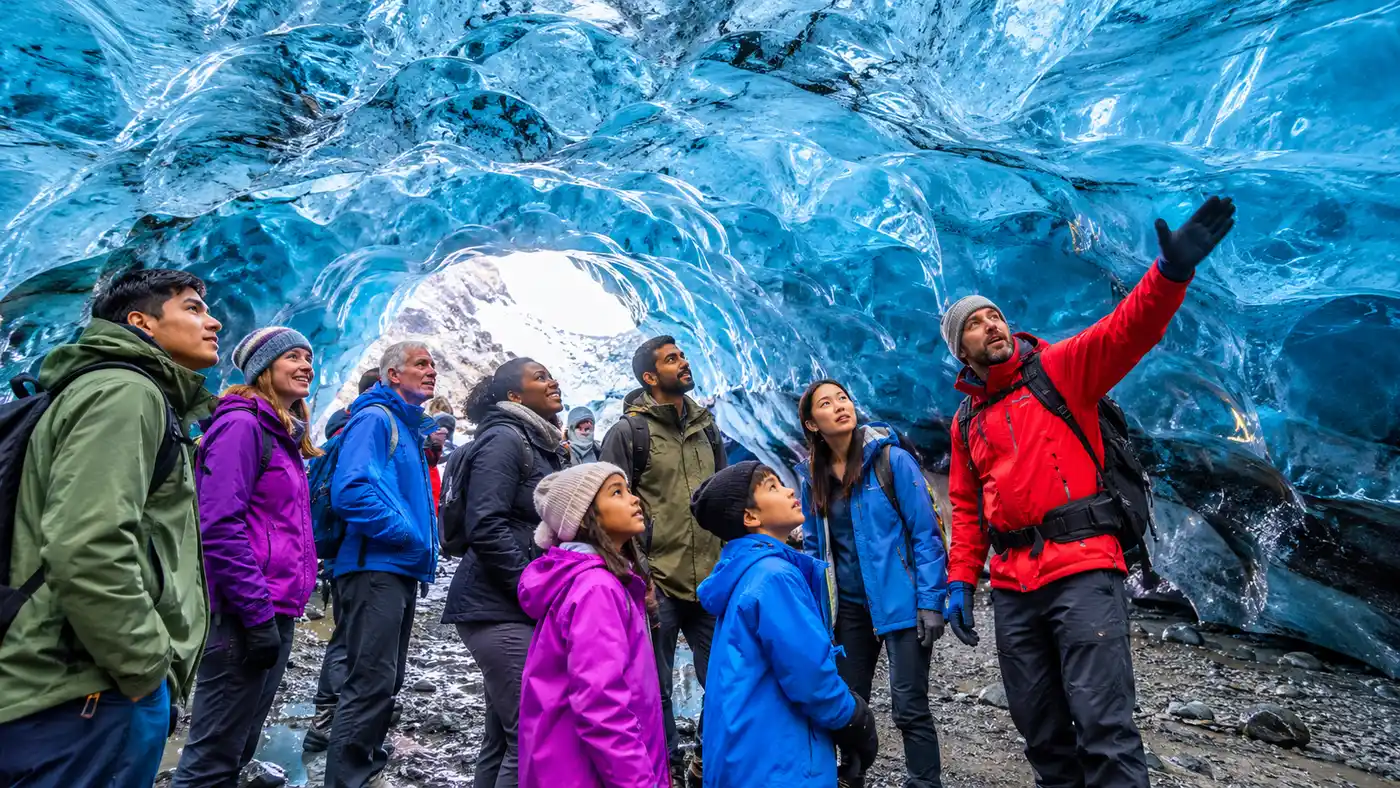
Can You Visit Katla Ice Cave on Your Own?
I hear this question all the time from travelers planning a South Coast road trip. You rented a sturdy Dacia Duster, you have sturdy boots, and you figure you can save two hundred bucks by driving out there yourself. The short, honest answer to whether can you visit katla ice cave on your own is a flat no. You cannot reasonably or safely do this without a certified guide, and attempting it usually ends with a drowned rental engine, a ruined vacation, or a rescue call to the local volunteer teams.
Every winter, tourists look at satellite maps and see a dirt track heading toward the glacier tongue. They think it looks like an easy afternoon detour off Route 1. It is not. Katla is not a roadside scenic viewpoint with a timber walkway and a parking kiosk. It sits tucked beneath an active volcano, carved out of moving ice, surrounded by glacial outwash plains that swallow standard vehicles whole. Here is an honest breakdown of why doing a Katla ice cave self tour is practically impossible, what the terrain actually looks like, and why this is the one excursion where paying an expert is non-negotiable.
Book your katla ice cave tour experience:
The Treacherous Katla Ice Cave Location and the Drive In
Finding the Katla ice cave location on a screen is deceptive. The cave sits on Kötlujökull, an outlet glacier of the massive Mýrdalsjökull ice cap in southern Iceland. On a digital map, it looks like a simple left turn off the Ring Road near Vík í Mýrdal, followed by a short crawl along an unpaved track. What the screen fails to show you is the sprawling sandur plain.
A sandur is a massive, shifting desert of black volcanic ash, loose gravel, and glacial sediment deposited by historic outburst floods. There are no paved lanes here. There are barely even marked tracks. The path changes constantly because melting ice shifts water channels across the black plain every single week. What was dry ground three days ago might be a rushing torrent of milky, silty water today.
Normal rental 4x4s simply cannot handle this ground. The tour operators run custom-built Super Jeeps on massive 38 to 44-inch tires. Those massive tires are deflated to single-digit air pressures, spreading the vehicle weight so they float over soft ash without sinking down to the frame. Take a regular rental SUV out there and you will bottom out in the deep ruts within five minutes.
Note: Rental companies track vehicles via GPS, and every standard rental contract completely voids your insurance the second tires touch an unbridged river or an unnumbered glacial track.
Then come the river crossings. Glacial meltwater is completely opaque, thick with gray sediment. You cannot see the riverbed. You cannot tell if the water is six inches deep or four feet deep, or if there is a boulder the size of a washing machine hidden just under the surface. I watched a private SUV stall out in a shallow river near here two autumns ago. Water reached the doors within twenty seconds, killed the electrical system, and the current started turning the chassis sideways. The repair bill was well over $15,000, and insurance covered exactly zero dollars of it.
Why a Katla Ice Cave Without Guide Attempt Is Dangerously Reckless
Let us say you somehow make it across the sandur on foot or in an amphibious rig. Now you are standing on the edge of the glacier. Entering an ice cave without professional gear and local glaciological knowledge is reckless in ways most visitors do not grasp until they see the ice up close.
Glaciers are not static chunks of rock. They are slow-moving rivers of dense ice that constantly creak, compress, crack, and shift. During warm spells or heavy rain, ice caves flood rapidly. Even worse, the ceiling structure weakens. A chunk of dense glacial ice the size of a microwave weighs hundreds of pounds. If it drops from a cave ceiling, it will crush a human skull, helmet or no helmet.
Certified local guides scout these caves every single morning before bringing clients inside. They test the stability of the entrance archway, monitor internal water levels, and check for stress fractures along the ceiling vaults. If a cave shows warning signs of structural weakness, guides immediately close the route and spend the morning finding an alternative chamber. You cannot do that safety assessment on your own.
Here is what you miss when you attempt to visit an ice cave without proper guidance:
- Daily structural checks: Guides chip away loose overhangs and monitor fracture lines with ice screws before anyone steps inside.
- Hidden crevasses: Wind blows black volcanic dust and light snow over massive cracks, creating deceptive bridges that can collapse under your body weight.
- Rapid flooding risks: Water levels can rise several feet in an hour if an interior meltwater pocket gives way upstream.
- Toxic gas buildup: Because Katla is an active volcano, pockets of geothermal gases like sulfur dioxide and hydrogen sulfide can pool in low-lying ice chambers without warning.
Volcanic gas is a quiet risk that few people talk about. Kötlujökull sits directly over the Katla volcanic caldera. Geothermal heat melts the underside of the glacier, which is why Katla features natural ice tunnels even in the middle of summer. But that same geothermal activity vents gases. Guides carry sensors to check air quality in deep pockets. If gas settles in a depression, you will pass out before you even realize you are in trouble.
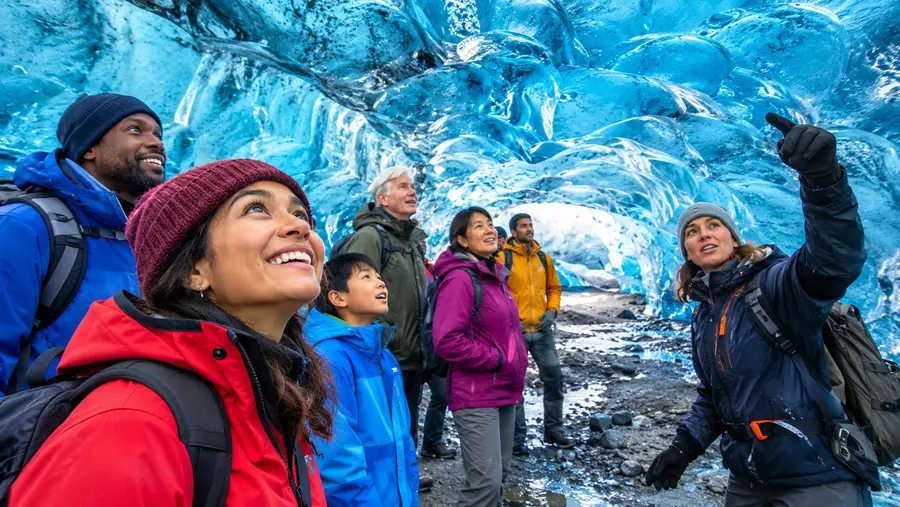
Katla Ice Cave Without Tour vs Guided Super Jeep: The Honest Comparison
People looking for a Katla ice cave without tour option usually want two things: they want to save money, and they hate the feeling of being herded around in a big tour group. That instinct makes total sense. I usually avoid packaged group tours whenever I can. But visiting Katla is not a sightseeing stop; it is an expedition into an active, hazardous environment.
To put the reality into perspective, take a look at how a self-drive attempt stacks up against booking an organized trip:
| Factor | DIY / Self-Drive Attempt | Licensed Super Jeep Tour |
|---|---|---|
| Access Road | Rough sandur plain, deep ash, unbridged rivers | Handled effortlessly by 4x4 Super Jeeps on low-PSI tires |
| Rental Car Insurance | Completely voided if damaged on tracks or in water | Not applicable; transport is fully covered by operator |
| Safety Gear Provided | None; you must source crampons, axes, and helmets | Certified climbing helmets and fitted microspikes/crampons |
| Glacier Navigation | High risk of crevasse falls and getting lost in fog | Experienced glaciologists choose stable, monitored paths |
| Average Cost | Free until your car floods ($10,000+ recovery bill) | Roughly $150 to $220 per adult |
If you hate crowd vibes, the secret is simply booking the earliest departure of the day. A super jeep tour from Vik leaves right from the town center and gets you to the ice before the big shuttle vans from the capital arrive. The group sizes on those Super Jeeps are small, usually just eight to twelve people, so you do not feel like cattle moving through a pen.
Pro tip: Book the first morning slot out of Vík around 8:30 AM to reach the cave entrance just as dawn light hits the ice, avoiding the midday tour groups.
You spend about 45 minutes bouncing over the lunar black sand, laughing as the driver plows through glacial creeks, and then you hike up to the wall with zero navigation stress. It feels adventurous without feeling like an emergency waiting to happen.
Book your katla ice cave tour experience:
Iceland Ice Caves Without Guide: Are Any Caves Accessible Alone?
The broader question usually follows: can you visit any iceland ice caves without guide supervision? The short answer across the entire country is essentially no, at least not safely. Glaciers like Vatnajökull and Mýrdalsjökull are fundamentally dynamic, hazardous wilderness areas.
Some people try to hike independently to the Skaftafell glacier tongues in Vatnajökull National Park. There are marked hiking paths that lead to the foot of the glacier, yes. But the national park explicitly prohibits walking onto the glacier ice without proper safety equipment and an authorized guide. Rangers patrol the boundary. If they catch you wandering out on the terminus without crampons and an authorized guide, they will escort you off the ice immediately.
If you are desperate to explore a cave independently in Iceland without paying for a glacier guide, you need to look underground into lava tubes instead of glacial ice:
- Raufarhólshellir: A vast volcanic lava tube south of Reykjavik with boardwalks, stairs, and stable basalt ceilings.
- Víðgelmir: Located in western Iceland, featuring wide, illuminated paths through volcanic rock formations.
- Vatnshellir: An 8,000-year-old lava cave on the Snæfellsnes Peninsula that goes deep subterranean, though even this requires an inexpensive site guide for entry.
Lava tubes have solid basalt rock ceilings that have stood for thousands of years. They do not melt when the thermometer climbs to 10°C, and they do not move three inches to the left after a heavy rainfall. Glaciers do both. Venturing into ice without mountaineering training is simply playing Russian roulette with falling ice slabs.
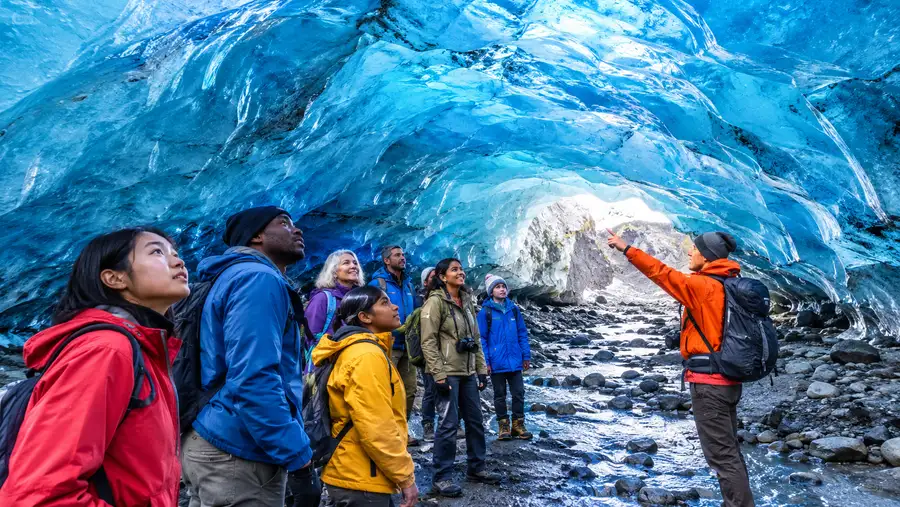
The Reality of Following an Online Katla Ice Cave Map
Sometimes travelers search online forums looking for an updated Katla ice cave map or GPS coordinates. They think that if they can just plug a waypoint into their phone or handheld GPS unit, they can trek across the sand from Route 1 on foot.
Glacier caves are temporary features. The cave you see in a photograph from six months ago does not exist anymore. It has either collapsed, melted away during summer, or filled to the brim with frozen volcanic gravel. The cave system on the eastern tongue, often referred to in the Dragon Glass cave on Mýrdalsjökull, changes its access points several times per year. Guides spend weeks cutting new steps, securing ropes, and finding fresh entrance tunnels as old ones deteriorate.
If you download GPS coordinates from a blog post written last year, you will navigate directly to a solid wall of ice, a flooded sinkhole, or a dangerous cliff edge. There is no permanent map for something that melts, flows, and rebuilds itself continuously.
Hiking across the outwash plain on foot from the paved road is also a terrible slog. The distance from Route 1 to the actual ice face looks deceptive on paper, maybe five to seven miles each way across dead flat ground. But walking through loose, damp volcanic sand feels like walking through deep wet snow with ankle weights on. You will tire out long before you reach the glacier snout, and you will still face several uncrossable, fast-flowing glacial streams that require waist-deep wading in near-freezing water.
I have met people who tried hiking it. They ended up soaked to their waists, shivering in forty-degree wind, lost in sudden glacial fog, and turned around before they ever got close enough to touch the blue ice. It is a miserable day out that wastes valuable South Coast road trip time.
Frequently Asked Questions about can you visit katla ice cave on your own
Can I drive a rental 4x4 to Katla ice cave on my own?
No. Normal rental 4x4s like a RAV4 or Duster lack the tire clearance and low tire pressure needed to navigate the deep volcanic sand and swift river crossings. Driving off marked roads is illegal in Iceland, and crossing unbridged rivers automatically voids all rental car insurance policies.
Is there a fee to enter the glacier if you reach it on foot?
Glaciers in Iceland sit on public land, so there is technically no general admission fee to stand on the ice. However, attempting to reach Katla on foot requires trekking miles across hazardous, waterlogged sandur plains, and walking onto the glacier without safety gear violates local safety advisories.
Can I visit Katla ice cave in the summer?
Yes. Unlike the winter-only caves in Vatnajökull, Katla can be visited year-round because the thick layers of insulating volcanic ash protect the ice from melting completely. However, summer visits require even stricter guide supervision due to increased meltwater activity.
Quick Reference
- Access requires 38-inch Super Jeeps across deep sandur plains
- Rental car insurance is voided by unbridged river crossings
- Caves shift and melt constantly, making old GPS maps useless
- Daily safety checks by local guides are required to monitor gas and roof stability
- Certified tours depart year-round directly from Vík í Mýrdal
Book your katla ice cave tour experience:
The Bottom Line
Iceland is a country that rewards independent spirits. You can explore dramatic waterfalls, black sand beaches, mossy canyons, and volcanic craters entirely on your own terms without spending a dime on organized tour buses. But glacier ice caves are the clear exception to that rule. The terrain is unforgiving, the navigation is fluid, and the safety margins are razor thin. Pay the local guides in Vík who spend their lives studying this ice. You will protect your rental car deposit, stay out of harm's way, and actually enjoy the otherworldly magic of standing inside a volcano-wrapped glacier.
Read more about katla ice cave tour.