Myrdalsjokull Glacier and Dragon Glass Ice Cave Guide
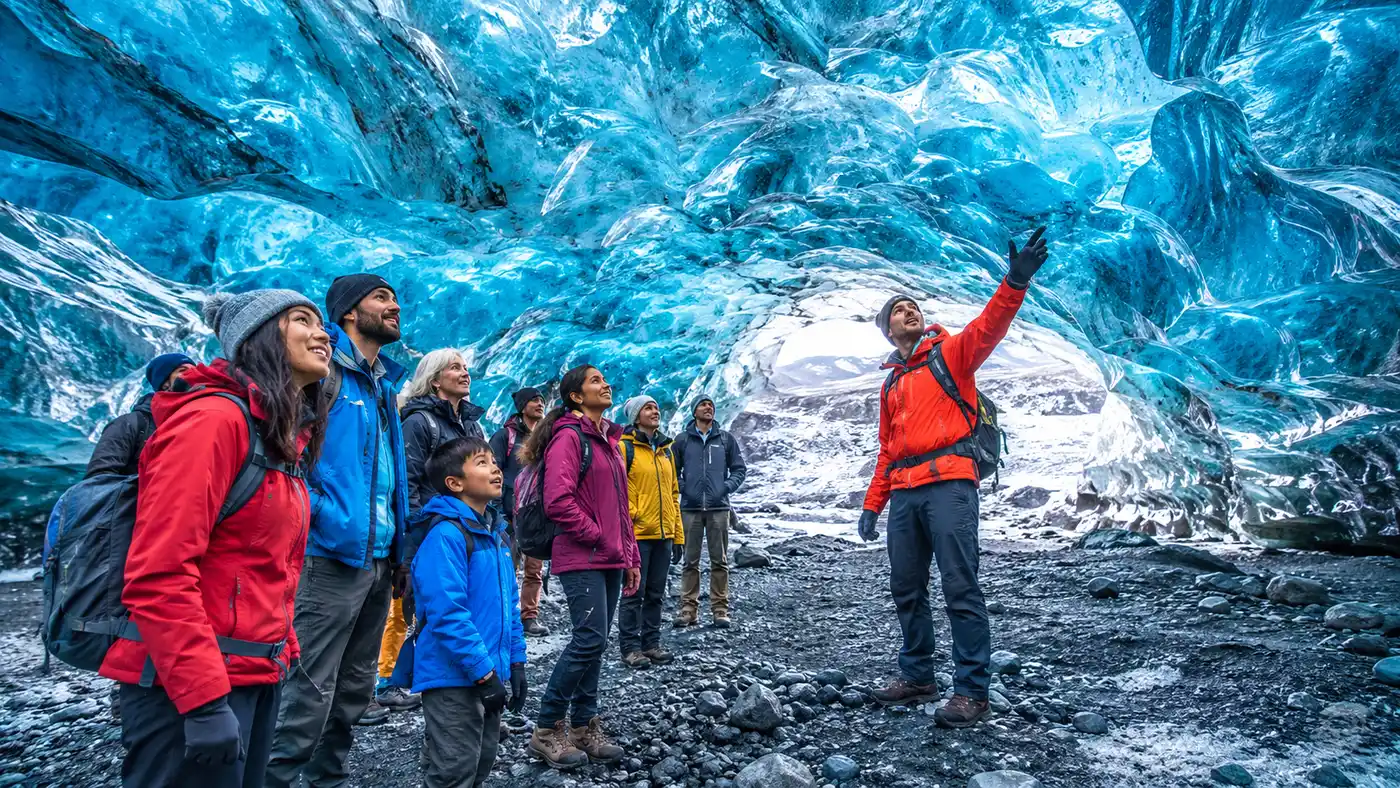
Most people imagine glacial ice as blinding white or diamond blue. Step inside the mýrdalsjökull glacier ice cave, though, and your eyes need a minute to adjust to the pitch-black bands slicing through the frozen ceiling. It looks almost alien. Centuries of volcanic eruptions from nearby Katla have laid down strata of dark basaltic tephra, trapping soot directly between layers of ancient, compacted snow. The result is raw, moody, and completely unlike the pristine postcard caves you find in southeastern Iceland.
This natural wonder sits tucked into Kötlujökull, an outlet glacier of the much larger Mýrdalsjökull ice cap. Film crews dubbed this region "Dragon Glass" during the production of Game of Thrones, and the name stuck with tour operators for obvious reasons. In this guide, I will walk you through what the cave actually looks like right now, how to get there across the black sand outwash plains, what gear makes the difference between misery and comfort, and whether booking a spot under the volcano makes sense for your South Coast itinerary.
Book your katla ice cave tour experience:
What Makes the Katla Volcano Ice Cave Look Like Dragon Glass?
The ice here tells a violent story. Underneath the 595-square-kilometer dome of Mýrdalsjökull sits Katla, one of Iceland's most active and fearsome volcanoes. It has historically erupted roughly every 50 years, with the last major caldera event occurring back in 1918. When Katla blows, it spews enormous clouds of basalt ash over the ice sheet. Over decades, winter snow blankets that ash, summer melts condense it, and the sheer weight of new precipitation crushes it into solid, dense glacial ice.
That interplay between ice and fire is what created the dragon glass katla ice cave. The dark ribbons running through the walls are not dirt or surface mud. They are genuine volcanic tephra frozen in place hundreds of years ago. Light filters through the thinner sections near the entrances, creating striking bands of midnight black set against deep electric turquoise. If you run your gloved hand along the wall, the ice feels ribbed and scalloped where warm winds have carved out smooth, golf-ball-like depressions.
Because Kötlujökull is constantly moving forward, about 30 to 40 meters each year depending on precipitation, the cave system is never static. Old chambers collapse every spring, and rushing meltwater carves fresh caverns before autumn sets in. Guides spend weeks scouting new openings, clearing debris, and chopping step tracks into the ice so visitors can walk through safely. What you visit in November might be an open river trench by the following July.
Pro tip: Bring a small headlamp with an adjustable beam rather than relying solely on your phone flashlight, because illuminating the ash bands from a steep side angle brings out the translucent blue beneath the soot.
Choosing the Best Mýrdalsjökull Glacier Ice Cave Tour
You cannot simply rent a 4x4 car at Keflavík Airport and drive to the cavern entrance. The tracks cutting across the floodplains are crisscrossed by braided glacial rivers that can swallow a standard crossover vehicle in seconds. Booking an organized katla volcano ice cave tour is mandatory, but you have two main routes for how to do it.
The first option is catching a super jeep tour straight from Vík. This is usually the easiest pick if you are already road-tripping down Route 1 and staying overnight somewhere along the southern coast. The drive takes around 45 minutes each way from town, leaving you ample time inside the ice without spending twelve hours sitting on a bus. The second choice is booking a day excursion from Reykjavík, which turns into an 11-hour road expedition along the coast with stops at Skógafoss and Seljalandsfoss along the way.
Tours run year-round, which makes the katla ice cave in mýrdalsjökull glacier special. Unlike the famous blue caves at Vatnajökull, which generally flood and become unsafe between April and October, Katla's high elevation and northern exposure keep several stable chambers accessible even in the middle of summer.
| Tour Type | Departure Point | Total Duration | Time at Cave | Approx. Cost (ISK) |
|---|---|---|---|---|
| Standard Super Jeep | Vík í Mýrdal | 3 to 3.5 hours | 45 - 60 mins | 25,000 |
| Fast-Track Minibus & Jeep | Vík í Mýrdal | 3 hours | 40 mins | 23,500 |
| Full-Day South Coast Excursion | Reykjavík | 10 to 11 hours | 50 mins | 38,000 |
| Private Super Jeep Charter | Vík or Reykjavík | Flexible | 90+ mins | 160,000+ |
The Wild Ride to Katla Glacier: Super Jeeps and Volcanic Outwash Plains
The journey to the mouth of the glacier is half the adventure. Once your group leaves the asphalt of the Ring Road just east of Vík, your driver will pull over to deflate the massive 38-inch or 44-inch tires on the modified truck. Soft tires float over thick sand and gravel without sinking. From there, you turn onto unmarked tracks running through the Mýrdalssandur desert.
The landscape looks desolate. Miles of coal-black sand stretch out toward the ocean on your right, while jagged moss-covered bluffs rise steeply to your left. Streams flow across the sand beds without warning. If you were thinking about driving out there on your own, abandon that idea right now. The glacial riverbeds hide treacherous quicksand pockets, and regular rental insurance explicitly forbids crossing these unnumbered sand tracks.
Watching a seasoned local guide navigate the terrain is fascinating. They read the current of each glacial stream, checking water depth by looking at ripple patterns before splashing through water that regularly washes halfway up the super jeep's doors. It is bumpy, noisy, and wonderfully thrilling. The vehicle eventually climbs a steep moraine ridge, depositing you just a few hundred meters from the snout of Kötlujökull.
Note: Flash flooding can happen rapidly during heavy rain events or unseasonable warmth, so operators occasionally cancel tours on very short notice when river crossings swell past safe thresholds.
Book your katla ice cave tour experience:
What to Expect Inside the Mýrdalsjökull Ice Cave
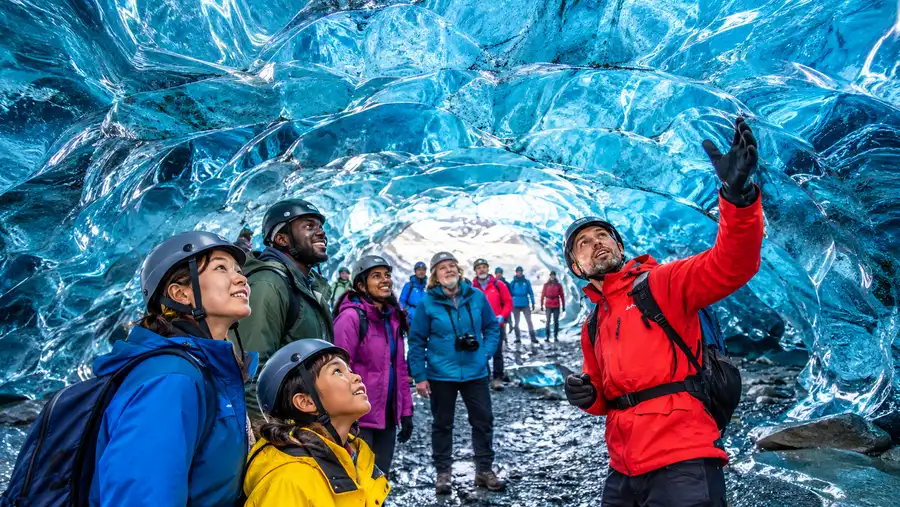
At the base of the ice, guides distribute gear. You will get a climbing helmet and a pair of slip-on crampons with steel spikes designed to bite into hard glacier ice. Putting crampons on over bulky winter boots takes a second of wrestling, but guides walk around checking everyone's straps before leading the single-file line up the terminal moraine.
The walk from the parking area to the cave opening takes about 10 to 15 minutes across loose scree and hard-packed glacier ice. Once you reach the threshold of the dragon glass katla ice cave tour, the temperature drops noticeably, hovering around 0 to 2 degrees Celsius regardless of what the weather feels like outside. Cold water drips persistently from above. You will hear the hollow plink of water hitting ice, the crunch of twenty pairs of spikes digging into the frozen floor, and the low whisper of wind traveling through the natural lava-and-ice tunnel.
Inside, wooden boardwalks, sand pathways, or temporary rope handrails guide visitors through the narrowest passages. Some chambers open up into high ceilings measuring six or seven meters overhead, letting pale daylight illuminate the dramatic black swirl lines in the ice. Other spots require ducking through arched tunnels where the ceiling brushes your helmet. The air smells mineral-rich, damp, and cold, like wet slate after a thunderstorm.
To keep yourself warm and comfortable inside the ice cavern, pack these specific items:
- Sturdy waterproof boots: Ankle support is essential because you will walk over uneven rocks and frozen slopes before reaching the cave.
- A completely waterproof outer shell: Glacial ceilings drip constantly, and water will soak straight through cheap cotton hoodies within ten minutes.
- Thin liner gloves: Heavy mittens make taking photos frustrating, so wear thin touch-screen gloves inside warm outer mitts you can slip off briefly.
- Fleece or wool mid-layers: Avoid denim or cotton track pants, which hold damp cold against your skin if you bump against an icy wall.
Practical Tips for Photographing the Mýrdalsjökull Glacier Ice Cave
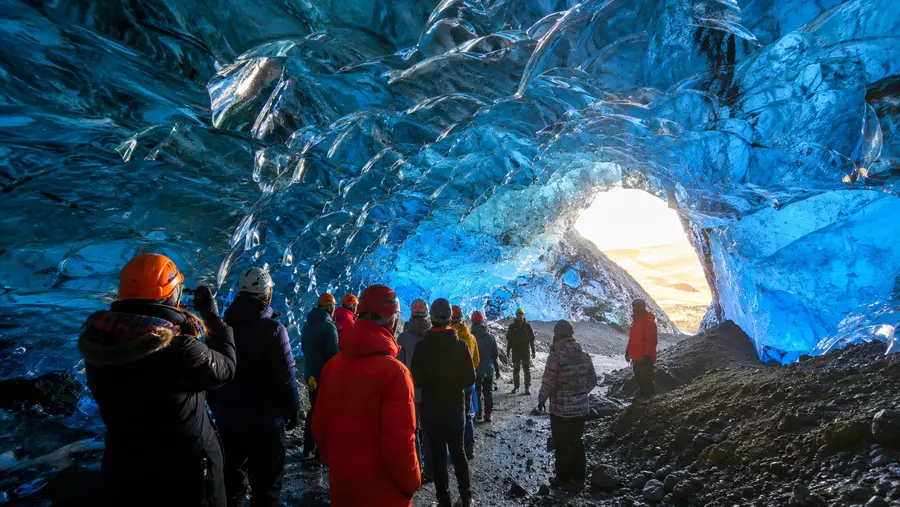
Photographing the Katla volcano ice cave can test your patience. The high contrast between the glowing, backlit blue archways and the dark volcanic tephra confuses most smartphone cameras. Shadows look muddy, and highlights blow out into harsh white circles. A few adjustments will help you capture the moody atmosphere without ruining your shots.
Keep these technical pointers in mind while wandering the chambers:
- Wipe your lens constantly: Glacial drip is inevitable, so keep a dry microfiber cloth in a zipped internal pocket to clear water droplets between snaps.
- Manually lower your exposure: Tapping your phone screen and pulling the brightness slider down preserves the subtle texture in the black ash bands.
- Include a human subject: Without a person in the frame wearing a bright red or yellow jacket, the scale of the massive arches gets completely lost in photos.
- Turn off your flash: Firing a flash against wet glacial ice creates an ugly white glare and flattens out the deep blue glow of the deep ice.
Crowds are another reality to navigate. Because this katla ice cave under the volcano tour is wildly popular and easily accessed from Vík, several super jeeps often arrive at once. If you find yourself surrounded by sixteen people trying to selfie in the same archway, hang back near the guide. Groups move along in waves, and there are almost always two or three quiet minutes between waves where you can shoot clean frames without stranger elbows in your picture.
Frequently Asked Questions about mýrdalsjökull glacier ice cave
How long do you actually spend inside the ice cave?
Most standard tours give you about 45 to 60 minutes inside the ice cavern itself. The rest of the three-hour excursion from Vík is spent driving across the rough sandur plains, gearing up with crampons, and walking along the moraine edge.
Can children join the Katla glacier tour?
Most tour companies set a minimum age limit of 6 or 8 years old. Walking on uneven ice with steel crampons requires a steady foot, and the frigid dripping environment can make very young kids miserable quickly.
Is the ice cave completely blue?
No, and that surprises some travelers. The ice here is a striking mix of vivid blue and deep coal-black ash. If you are searching exclusively for pristine, crystal-clear sapphire ice without any volcanic residue, the winter-only caves at Vatnajökull might be closer to what you envision.
Are there bathrooms at the glacier?
There are zero facilities once you leave the town of Vík. No outhouses, no porta-potties, and nowhere to hide on the open black sand plains. Use the restroom at the meeting point in Vík before climbing aboard the super jeep.
Quick Reference
- Location: Kötlujökull outlet glacier, South Iceland
- Nearest town: Vík í Mýrdal (45-minute drive)
- Season: Open year-round
- Physical rating: Easy to moderate (15-minute uneven hike)
- Key feature: Volcanic ash layers trapped in ancient ice
Book your katla ice cave tour experience:
My Take
If you have only seen pictures of bright blue, glass-like ice caves on Instagram, your first glimpse inside the Mýrdalsjökull glacier ice cave might catch you off guard. It is gritty, raw, and dark. Yet that is precisely what makes it worth doing. Standing beneath hundreds of tons of ancient frozen water while looking at the physical ash layers deposited by Katla's historic eruptions connects you directly to the volcanic engine that built Iceland. Book a slot leaving out of Vík, put on your good waterproofs, and go see the Dragon Glass for yourself.
Read more about katla ice cave tour.